When a teacher asks me what the best way to order education supplies is, I usually don't give a straight answer. Not because I'm being difficult—the right move depends on what's going into the cart. A Bacillus subtilis culture for the bio lab has different requirements than a carton of construction paper. An HP printer might as well be in another universe.
I learned this by losing money in all three categories. Since 2019, I've coordinated purchasing for a small K-12 charter school and I've personally made nine documented ordering mistakes that cost roughly $3,200 total. The number probably would have been higher if I hadn't started keeping a checklist. The checklist is what turned the pattern around.
Most of our school supply orders go through Nasco Education because we use them as a one-stop supplier. The lessons apply no matter where you buy, though. The problem is rarely the vendor—it's how I review the order before submitting it.
Every order I place now falls into one of three scenarios:
- Scenario 1: Lab and specialty science items. Format, shelf life, and delivery date matter most here.
- Scenario 2: Classroom supplies people see and handle. Construction paper is the classic example.
- Scenario 3: Office tech and bulky deliveries. These need Wi-Fi, power, or floor space—sometimes all three.
Scenario 1: Lab and Specialty Science Orders
Lab orders trip up people who don't live in a lab. That's me. I coordinate purchasing. I'm the checklist person, not the microbiologist.
In 2019, after a new biology teacher joined, I ordered everything on their list, including Bacillus subtilis culture. It sounded like one product. I found the item, clicked add to cart, and moved on. When the box arrived, the teacher asked where the prepared plates were. I had ordered lyophilized pellets—freeze-dried culture in a vial. It was technically B. subtilis. It was also useless for the lesson scheduled that week. Replacement plates cost about $140, and we lost five teaching days waiting.
The frustrating part is that these names look simpler than they are. You'd think one product with one clear name would have exactly one entry. But there are culture plates, broths, slants, and lyophilized vials, each with a different item number and a different shelf life. The item description will tell you what you're buying. You just have to read it before you check out, not after.
If you look up a Bacillus subtilis culture in the Nasco Education science section, you'll see exactly what I mean—multiple forms, multiple item numbers. Now I don't order anything biological until I know three things: the exact form, the quantity, and the date it needs to arrive.
I also stopped grouping all science orders into one giant annual purchase. For two years, the spreadsheet made that look smart: one shipment, one invoice, lower shipping costs. My gut said the lab schedule wouldn't cooperate. It didn't. In September 2023, live cultures arrived the same week the lab was closed for flooring, and the shipment sat in a warm receiving area for two days. That's when I started ordering biological supplies separately and scheduling them closer to when they're needed.
One more thing: faster shipping is not always better for live materials. I used to choose overnight by default. Then I learned it can arrive on Saturday when no one is on campus. Last spring I almost rushed a culture order out on the Friday before spring break. I changed it to standard delivery, and the package arrived after break when someone was here to receive it. So glad I did.
Scenario 2: Supplies People See and Touch
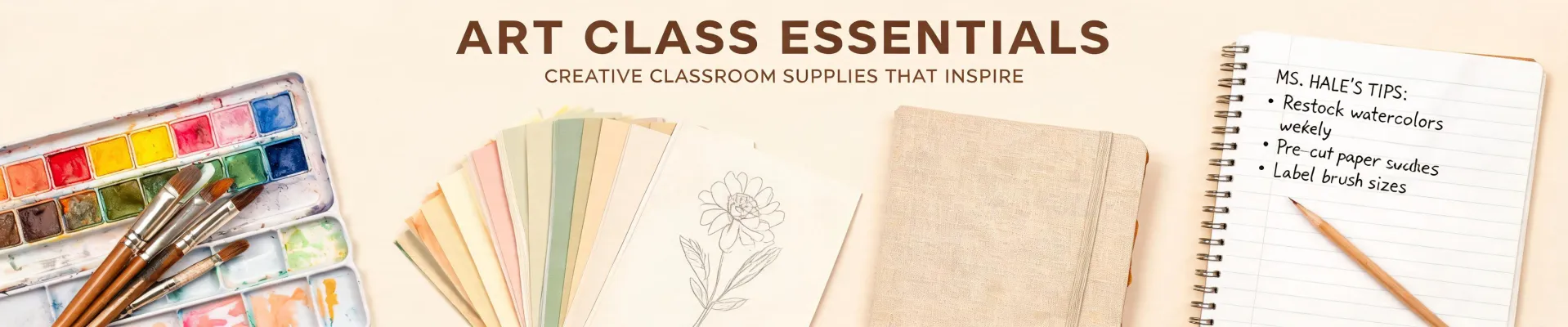
Construction paper seems like the easiest part of school supply ordering. It's paper. It has colors. What could go wrong? I thought that until the 2021 spring art showcase.
I had bought budget construction paper to save the school about $120 across ten cartons. Economically, it seemed responsible. Two weeks later, the art teacher walked me to the hallway where student work hung. The colors looked washed out, and the sheets had torn along fold lines when kids handled them. A parent walking down that hallway didn't see a budget line that said we saved $120. They saw a school that didn't care about presentation.
Looking back, I should have spent the extra money upfront. At the time, I treated the budget as the only measure of good purchasing. In reality, I just moved the cost downstream: replacement paper, teacher frustration, and a worse impression for visitors.
That's not the same as saying budget paper is always wrong. If it's for cutting practice, scrap bins, or rough drafts, the standard weight works fine. But if it's for displayed work—or anything that goes home—I buy the better grade. The difference per carton is small, and it's one of the cheapest ways a school can show it pays attention to detail.
Another lesson from the same area: skip giant color assortments. A 50-color pack sounds like good value until the same eight colors run out while the other 42 sit unused. These days I pick the ten or twelve colors the school actually uses and order those in larger quantities. The Nasco Education art section makes that easier if you already know what you're after.
Scenario 3: Tech, Equipment, and Deliveries That Don't Fit
The third category didn't seem to need a system either, until I stood in front of an HP printer that refused to join the school's Wi-Fi.
Buying the printer was easy. Setting it up was not. I assumed that connecting an HP printer to Wi-Fi would work the way it does at home: open the app, choose the network, enter the password. School networks aren't that simple. Ours has separate staff and student networks with extra credentials on the staff side, and the standard instructions don't cover that. After the third failed attempt, I was ready to send the printer back. What finally helped was finding the advanced manual setup option in the HP Smart app and having our IT person walk us through the correct network profile.
The most frustrating part is that nothing in the box tells you this. The printer works. The Wi-Fi works. They just don't cooperate until someone who understands the school network gets involved.
Now, before I order anything that connects to Wi-Fi, I ask our IT coordinator one question: should this go on wireless, or do you want a wired connection? That one email has prevented most of the setup disasters since.
The same logic applies to anything that takes up space. If an order will arrive in more than a few boxes, I measure the storage area before I submit. I learned that during a supply room reorganization. The order's cartons added up to about 64 cubic feet. The usable floor space after shelves was closer to 48. I ended up stacking cartons in a hallway and moving them twice. Now I put the carton dimensions into a simple cubic feet calculator and compare the total to the space. It takes about two minutes, and it's saved me from repeating that mess.
Whenever a printed piece is part of a school event, I follow the same logic. Instead of running 1,000 flyers through an office printer, I get quotes from print shops. Publicly listed online pricing for 1,000 single-sided flyers was about $80 to $150 in January 2025, and local shops were closer to $150 to $300 depending on the job. Comparing those numbers beats a day of paper jams and quality complaints.
How to Tell Which Scenario You're In
If your order mixes categories, don't try to apply one rule to all of it. Ask three questions:
- Is anything alive, perishable, or tied to a specific lesson date? Use the Scenario 1 checklist. Check the form, item number, and delivery day.
- Will students, parents, or visitors see or handle it? Use the Scenario 2 approach. Buy the grade you're comfortable putting your school's name on.
- Does it need Wi-Fi, power, or floor space? Use Scenario 3. Ask IT first, then measure the room and do the cubic feet calculation.
After you've made those product decisions, look for an active Nasco Education coupon. I treat coupon codes as the last step in an order, not the reason to choose a product. They've saved me enough over the years that it's now part of my routine.
I'm not saying every school needs premium everything. I still order budget paper for practice and scrap use, and I still compare prices. I just don't pretend that one ordering style fits all three scenarios. In the past eighteen months, this system has caught seven potential mistakes before they shipped. Hopefully it saves you the $3,200 it took me to learn.