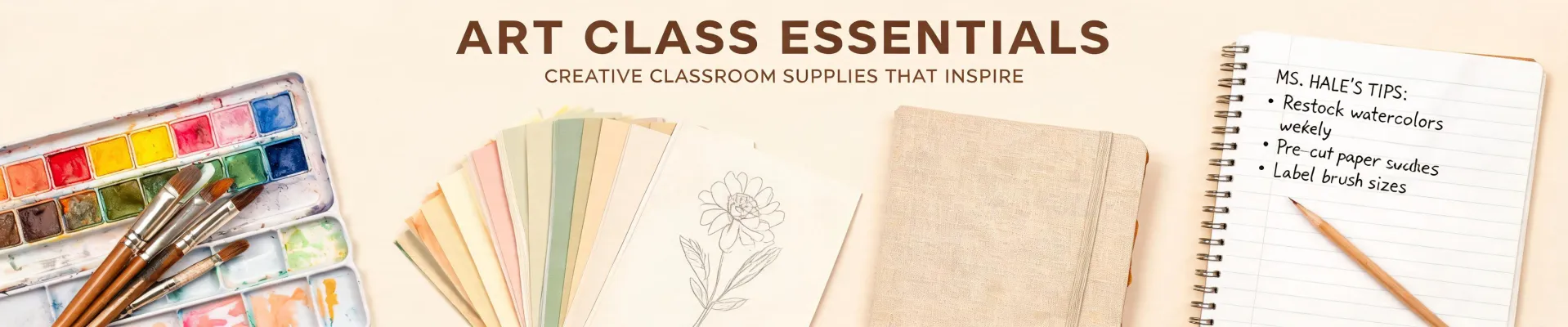
You’ve got a budget to equip a science lab or art classroom. Maybe it’s for a new school year, or you’re expanding a program. The goal is straightforward: get the necessary supplies without blowing your budget or ending up with low-quality stuff you’ll have to replace in six months.
I’ve been managing procurement for a mid-sized school district for over five years, and I’ve made plenty of mistakes. I’ve bought the “cheap” option that failed mid-semester, and I’ve overpaid for premium brands when a mid-tier option would have worked fine. This checklist is based on those experiences. It’s designed to help you avoid the same headaches.
Here’s a 5-step checklist to get the best value for your educational supply budget.
Step 1: Get Specific on What You Really Need
Before you even open a catalog (like the Nasco Education catalog), write down the exact specifications. This sounds obvious, but I’ve seen it slip. A science teacher asks for “bacillus subtilis culture” without specifying the strain or quantity needed for the semester. An art teacher asks for “quality acrylic paint” without defining the volume or lightfastness rating.
What to do: Create a list with three columns: Item, Quantity, and Must-Have Specifications. For a standing desk converter, list the weight capacity and minimum height range. For a printer, note whether you need duplex printing or network connectivity. This step alone prevents you from buying the wrong item and having to deal with returns.
I once approved a purchase for “laser printer” without specifying “duplex.” The cheapest model we found didn’t have it. The teacher ended up manually flipping pages for every handout. That’s a simple, avoidable mistake. The specific specs also let you compare apples to apples when you get quotes.
Step 2: Get at Least Three Quotes, but Look Beyond the Sticker Price
Conventional wisdom is to get multiple quotes. That’s correct. But I’ve learned the hard way that the lowest quote isn’t always the cheapest. (Surprise, surprise).
Why does this matter? Because total cost of ownership (TCO) includes more than the unit price.
What to compare:
- Unit price – The obvious one.
- Shipping and handling – This can vary wildly. Some suppliers offer free shipping over a certain amount. Others have flat fees.
- Minimum order requirements – If you’re a small school or a startup lab, a $500 minimum might force you to buy items you don’t need yet. That ties up cash.
- Discount codes – Many suppliers, including Nasco, offer promo codes for first-time buyers or for orders over a certain size. Always check. I’ve saved 15% on an initial order just by looking for a code.
- Rush fees – If you need it by a specific date, ask about expedited processing costs upfront. Don’t assume standard delivery timelines apply.
For example, when I was comparing quotes for a classroom set of calculators, Vendor A had a slightly higher unit cost than Vendor B. But Vendor B charged a flat $50 handling fee and had a 10% restocking fee on returns. Vendor A included free ground shipping and no restocking fee. Over a $2,000 order, Vendor A was actually $70 cheaper. The devil is in the details.
Step 3: Check the Fine Print on Fees and Policies
This is the step most people rush. I only believed this after ignoring it once and paying for it. We ordered a set of science lab materials, and one item arrived with a cracked beaker. We tried to get a replacement. The vendor’s policy required that we pay for return shipping and a 15% restocking fee for the partial return. That “guarantee” sounded solid until we needed to use it.
What to check:
- Return policy – How many days do you have? Who pays return shipping? Are there restocking fees?
- Backorder policy – If an item is out of stock, do they delay the entire order? Or do they ship what’s available and backorder the rest? This is crucial for a lesson plan that depends on specific materials.
- Hidden fees – Some suppliers add environmental fees or hazardous materials surcharges on things like certain chemicals or art solvents. These can add 5-10% to a specialized order.
- Ask for the current lead time, not the standard one. Supply chains are still strange.
- Add a buffer. I add 25-30% to whatever they tell me. If they say 10 days, I plan for 13-14. (note to self: I really should document this buffer in our official planning tool).
- Have a backup plan. For critical items (like chemicals for a lab experiment that can’t be moved), have a secondary source in mind.
What I do now: I have a checklist for evaluating a new vendor. I either call their customer service or check their terms and conditions page. If they’re vague, I ask for written confirmation. If they won’t give it, that’s a red flag.
Step 4: Evaluate the Supplier’s Attitude Toward Your Order Size
This is more important than you think. When I was starting out managing a small program, I had suppliers who barely responded to my questions because my first order was only $200. One vendor’s sales rep said, “Our typical customer orders much more than this.”
The lesson: A vendor’s attitude toward a small order tells you a lot about their long-term service. The vendors who treated my $200 orders seriously are the ones I still use for $20,000 orders. They invested in the relationship. So even if you’re a small customer now, look for suppliers that take your needs seriously. Small doesn’t mean unimportant—it means potential.
Nasco, for example, positions itself as a one-stop education supplier. Their catalog covers everything from school supplies to specialized art supplies and science lab cultures. They don’t seem to discriminate based on order size, which is a green flag.
Step 5: Calculate the Real Timeline
Supplier lead times are often optimistic. I’ve had a vendor promise a 5-day delivery for a laser printer that took 14 days to ship. That “standing desk converter” we ordered for an ergonomic trial? It was on backorder for a month.
What to do:
The worst-case scenario is a delayed shipment causing a canceled lesson. That’s a cost that doesn’t show up on the invoice, but it’s real.
A Final Note on Common Mistakes
One thing I still catch myself doing: assuming a brand I know from one category is the best in another. Just because a company makes good microscopes doesn’t mean their art supplies are the best value. Check reviews specific to the product type.
Another pitfall? Not checking for promo codes or coupon codes. It takes 30 seconds to search and can save 10-20%. Don’t be shy about using them. Every dollar saved is a dollar you can reinvest in a better item or a future project.
So, that’s the checklist: define specs, compare TCO, read the fine print, test the vendor’s service attitude, and plan for delays. Follow this, and you’ll set up your classroom or lab without the regret of a bad purchase.